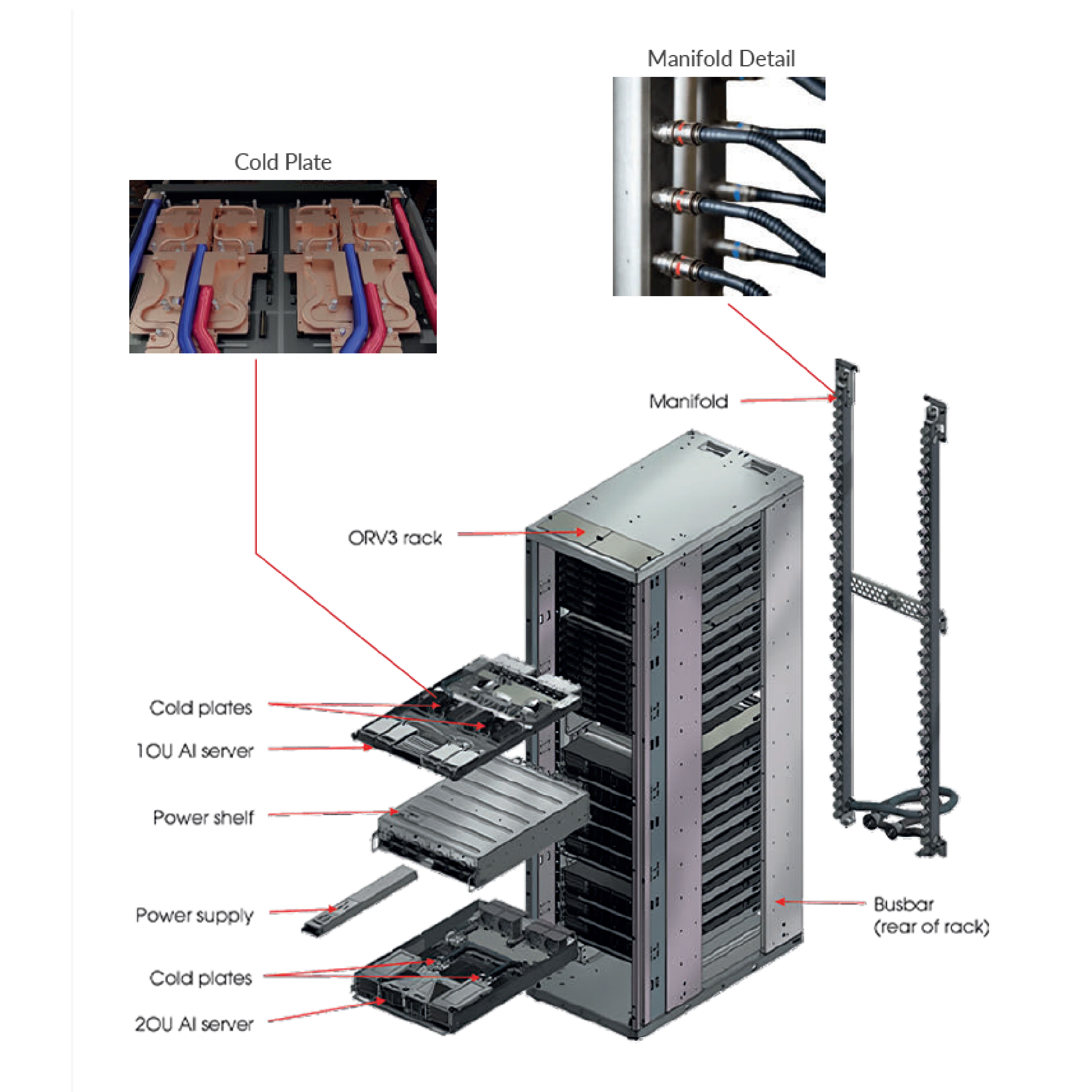
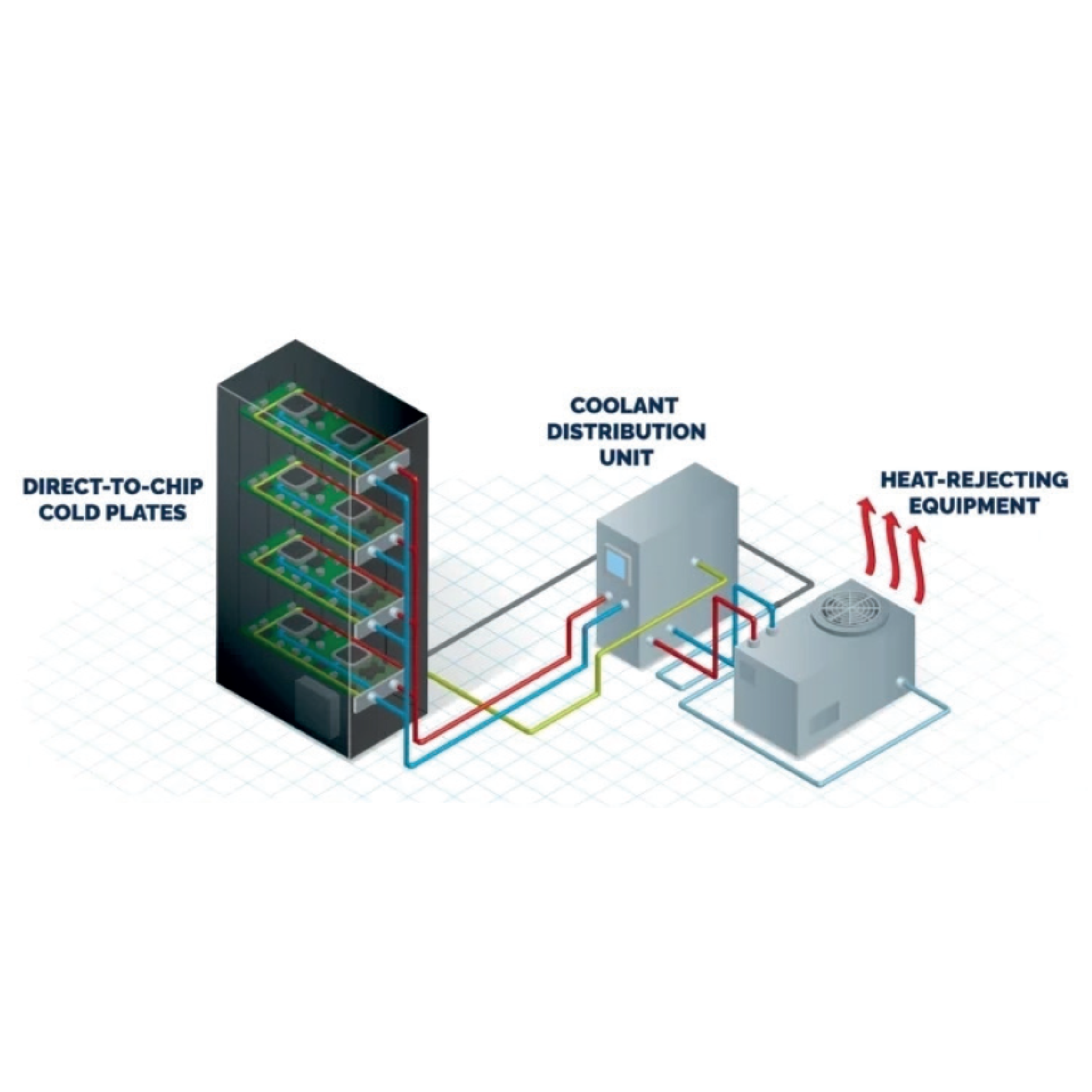
Description
Advantages of Direct-to-Chip Liquid Cooling:
Lower Power Usage Effectiveness (PUE)
– Direct-to-chip liquid systems can achieve PUE values closer to 1.03-1.05 , compared to 1.5+ for traditional air-cooled systems.
– Reduced reliance on fans and air handling units cuts down cooling power consumption.
Superior Thermal Performance
– High heat removal efficiency: Liquids have a much higher thermal conductivity than air (about 1,000x), enabling more efficient heat transfer.
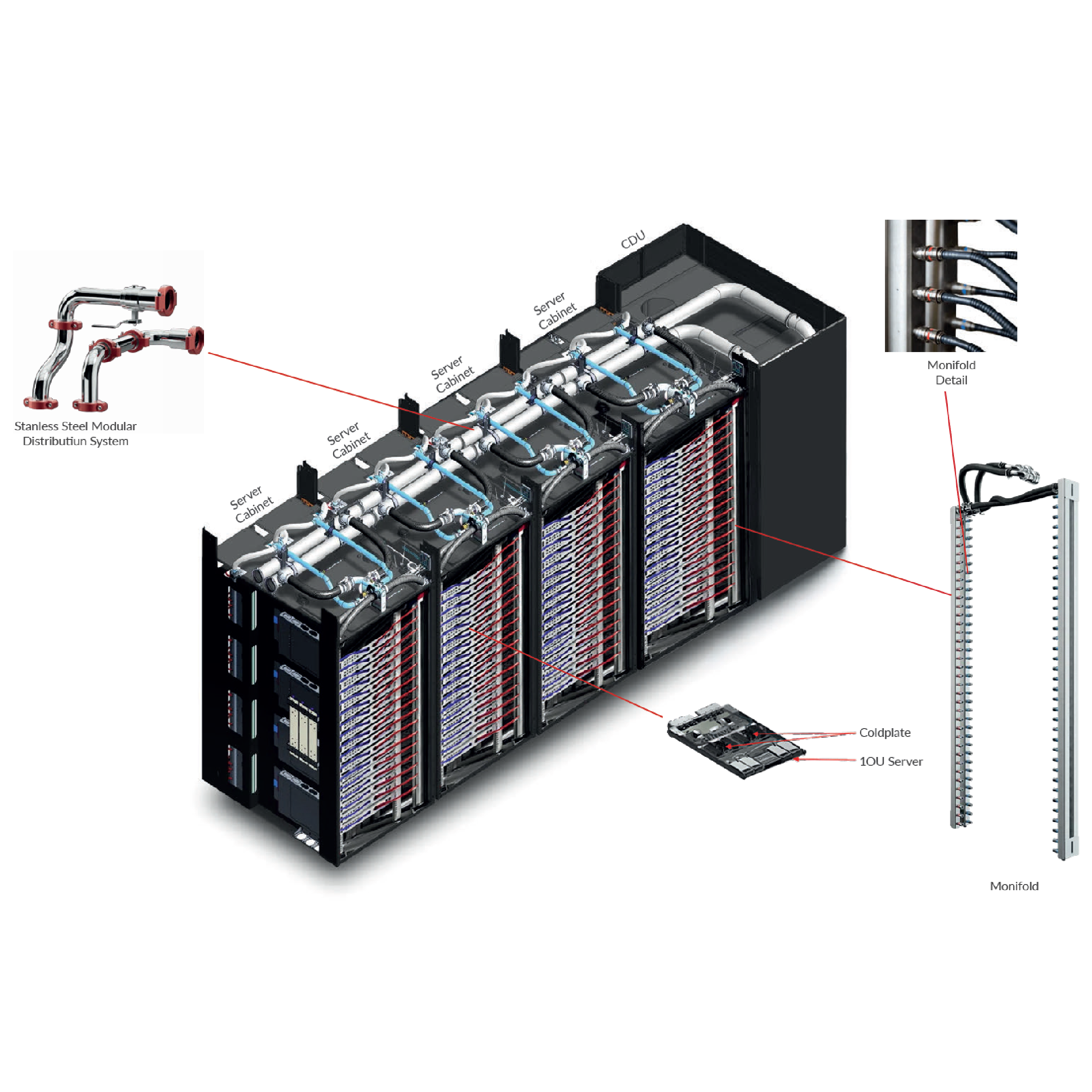
– Targets hotspots directly: Coolant flows through cold plates mounted on CPUs, GPUs, and memory chips, extracting heat at the source.
Support for Higher Density Deployments
– Allows servers to run at higher power densities (Up to 110kW/ rack), which would be difficult or impossible to cool with air.
– Facilitates more compact data center layouts.
Quiet Operation
– Fewer and smaller fans are required, resulting in quieter data center environments.
Reduced Data Center Footprint
– Less space needed for CRAC units, ducting, and raised floors.
– Enables more efficient use of space within existing facilities.
Improved Component Reliability
– More consistent and lower operating temperatures can increase the lifespan and reliability of processors and other critical components.
Waste Heat Reuse Potential
– Since the coolant can leave the cold plate at higher temperatures (e.g., 50–65°C), it opens opportunities for heat reuse (e.g., heating buildings or water).
Environmental Friendly
– Reduces energy consumption and carbon footprint.
– Can integrate with free cooling (e.g., using outside air or water towers to cool the liquid).